

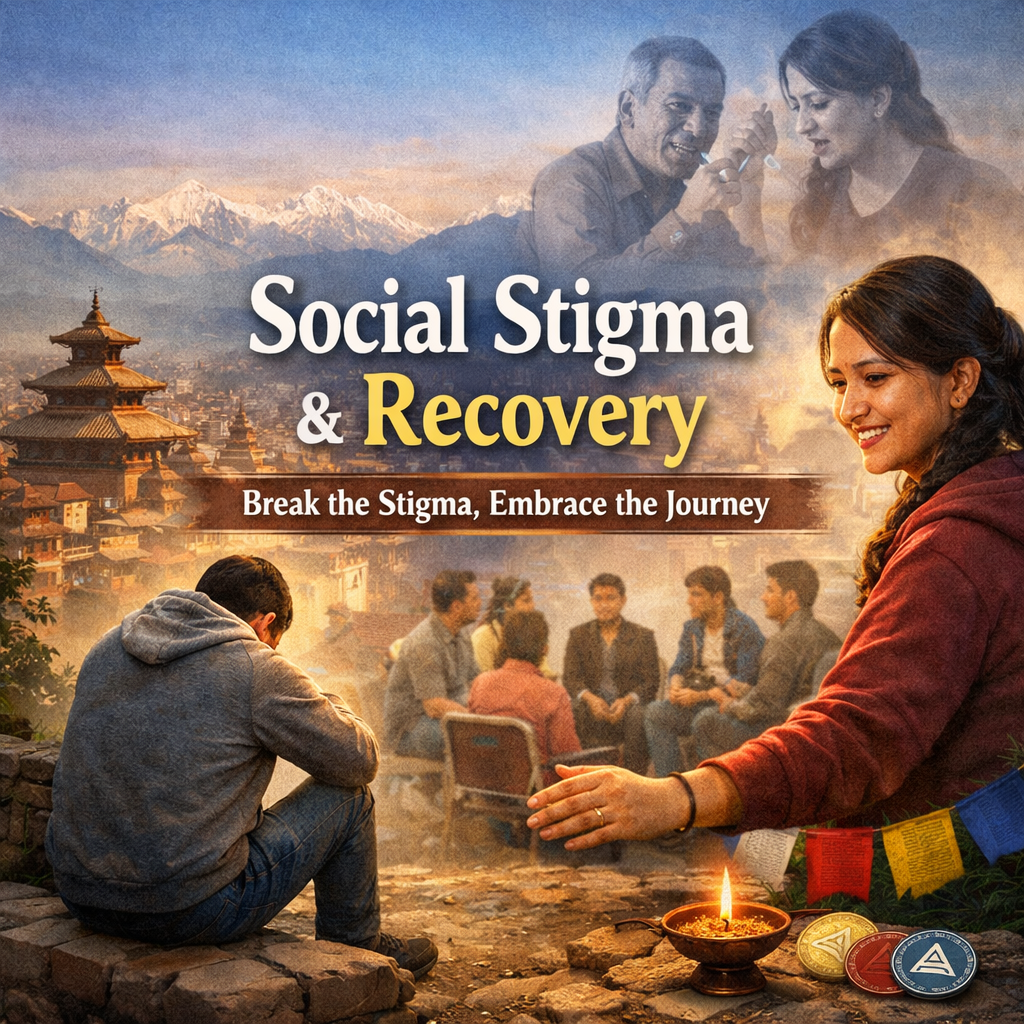
Recovery from addiction is not a single moment of change; it is a long, courageous journey that requires patience, support, and belief—both from the individual and from society. In the Nepali community, where social relationships, family honor, and public image hold deep importance, recovering addicts often face an additional challenge beyond physical and psychological healing: social stigma. This stigma can quietly, yet powerfully, affect the continuity of recovery.
In many parts of Nepal, addiction is still viewed as a moral failure rather than a health condition. People who have struggled with substance use are often labeled as “बिग्रिएको मान्छे,” “नालायक,” or “विश्वास गर्न नहुने व्यक्ति.” Such labels do not disappear once a person decides to recover. Even after completing rehabilitation or counseling, individuals may continue to be judged by their past rather than recognized for their effort to change. This constant judgment can deeply hurt self-esteem and weaken motivation.
Family and community reactions play a crucial role in recovery. In a close-knit Nepali society, news spreads fast. A recovering person may feel watched, doubted, or excluded from social and religious activities. Sometimes, families—out of fear of social shame—avoid talking openly about recovery or discourage the individual from participating in community life. This isolation can make the person feel alone, increasing the risk of relapse. Recovery thrives on connection, but stigma often pushes people into silence.
Employment and education are other areas where stigma shows its impact. Many recovering addicts in Nepal struggle to find jobs because employers hesitate to trust them. Without meaningful work or purpose, individuals may feel hopeless, thinking that no matter how hard they try, society will not accept them. This feeling can be dangerous, as hopelessness is one of the strongest triggers for relapse.
However, it is important to remember—and to remind every recovering individual—that seeking recovery is an act of strength, not weakness. Choosing to heal shows responsibility, courage, and self-respect. The past cannot be changed, but the future is shaped by daily choices. One day of sobriety leads to another, and continuity in recovery is built step by step.
To those in recovery: your journey matters. Do not let society’s labels define your worth. You are more than your addiction, more than your mistakes. Surround yourself with supportive people—counselors, peer groups, trusted family members, or recovery communities. In Nepal, self-help groups, rehabilitation centers, and community-based organizations are slowly growing, creating safe spaces where recovery is understood and respected.
At the same time, the Nepali community must also reflect. Addiction is not a curse or a crime; it is a health issue that can affect anyone—regardless of caste, class, or education. When society replaces judgment with compassion, recovery becomes sustainable. A kind word, a second chance, or simple trust can make a powerful difference.
In conclusion, social stigma remains a serious barrier to recovery in the Nepali context, but it is not undefeatable. With awareness, empathy, and continued support, individuals can maintain their recovery and rebuild meaningful lives. Recovery is not about being perfect; it is about not giving up. And every step forward—no matter how small—is a victory worth respecting.
Leave a Reply