

Breathing is one of the simplest yet most powerful tools to calm the mind, relax the body, and improve emotional balance. Our breathing pattern changes with stress, anxiety, fear, anger, depression, panic, and trauma. By learning healthy breathing techniques, people can better manage mental health challenges and improve daily functioning.
Breathing exercises are widely used in counseling, psychotherapy, rehabilitation centers, meditation practices, stress management programs, and emotional healing activities.
Why Breathing Matters in Mental Health
When a person experiences stress or emotional disturbance, the nervous system becomes overactive. Breathing often becomes:
- Fast
- Shallow
- Irregular
- Chest-focused
This activates the “fight or flight” response, increasing:
- Anxiety
- Fear
- Irritability
- Racing thoughts
- Increased heartbeat
- Muscle tension
Slow and controlled breathing helps activate the “rest and relaxation” response of the body. It can:
- Reduce stress hormones
- Improve oxygen flow
- Calm the nervous system
- Improve focus and sleep
- Reduce emotional reactivity
- Support recovery from addiction and trauma
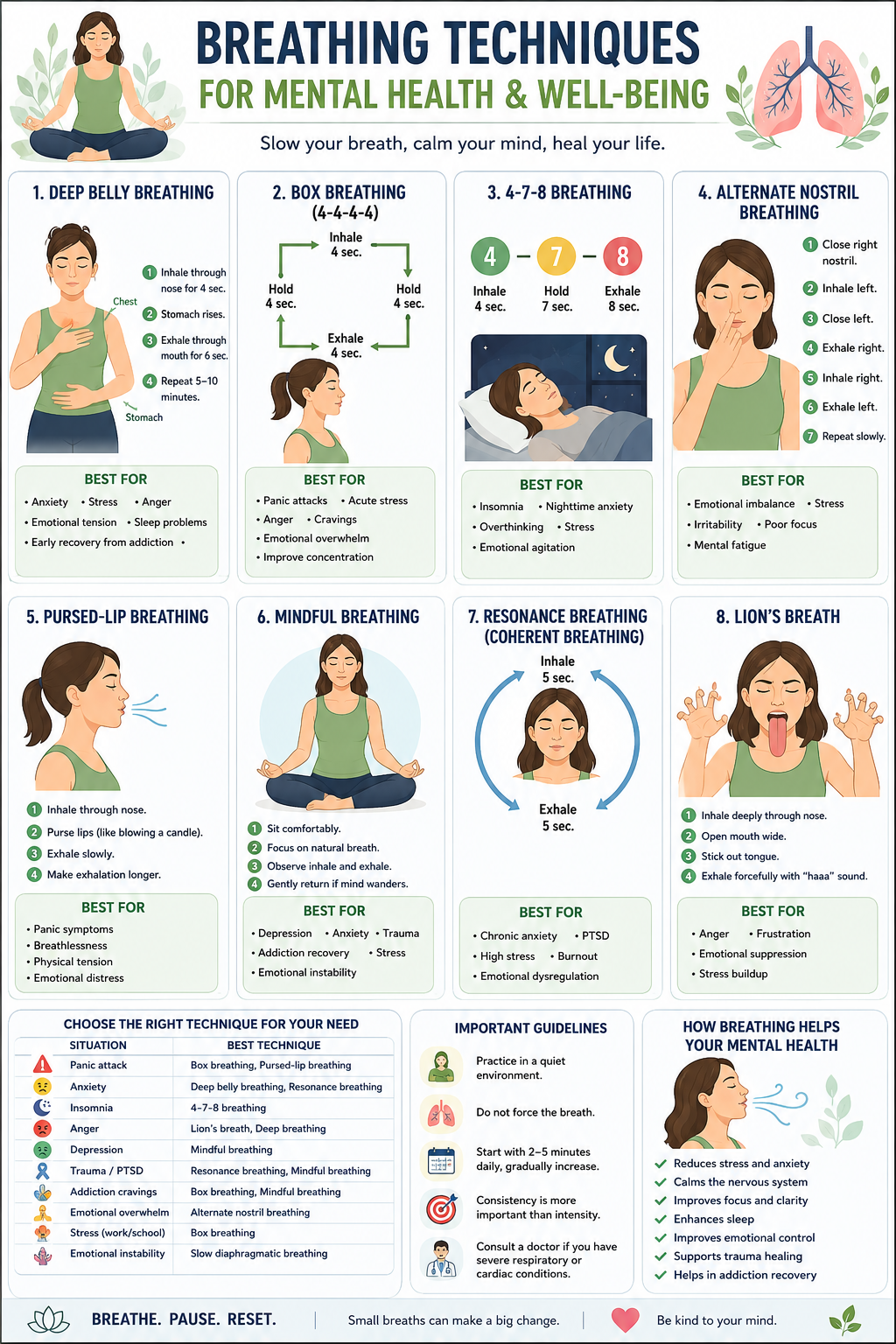
1. Deep Belly Breathing (Diaphragmatic Breathing)
What It Is
This technique involves breathing deeply into the stomach rather than shallow breathing into the chest.
How To Practice
- Sit or lie comfortably.
- Place one hand on the chest and another on the stomach.
- Slowly inhale through the nose for 4 seconds.
- Allow the stomach to rise.
- Exhale slowly through the mouth for 6 seconds.
- Repeat for 5–10 minutes.
Best Used For
- General anxiety
- Stress
- Anger
- Emotional tension
- Early recovery from addiction
- Mild depression
- Sleep problems
Benefits
- Relaxes muscles
- Slows heart rate
- Reduces panic feelings
- Improves emotional control
2. Box Breathing (4-4-4-4 Technique)
What It Is
A structured breathing method commonly used by athletes, military personnel, and therapists to improve calmness and concentration.
How To Practice
- Inhale for 4 seconds.
- Hold breath for 4 seconds.
- Exhale for 4 seconds.
- Hold empty lungs for 4 seconds.
- Repeat several rounds.
Best Used For
- Panic attacks
- Acute stress
- Anger management
- Emotional overwhelm
- Cravings during addiction recovery
- Improving concentration
Benefits
- Stabilizes emotions
- Improves self-control
- Reduces racing thoughts
- Enhances mental focus
3. 4-7-8 Relaxation Breathing
What It Is
A calming breathing technique that promotes deep relaxation and sleep.
How To Practice
- Inhale quietly through the nose for 4 seconds.
- Hold the breath for 7 seconds.
- Exhale slowly through the mouth for 8 seconds.
- Repeat 4–8 cycles.
Best Used For
- Insomnia
- Anxiety before sleep
- Nighttime overthinking
- Stress-related tension
- Emotional agitation
Benefits
- Helps sleep naturally
- Calms nervous system
- Reduces anxiety intensity
4. Alternate Nostril Breathing
What It Is
A traditional yogic breathing practice that balances emotional and mental energy.
How To Practice
- Close the right nostril with thumb.
- Inhale through the left nostril.
- Close the left nostril.
- Exhale through the right nostril.
- Inhale through the right.
- Switch and exhale through the left.
- Continue slowly.
Best Used For
- Emotional imbalance
- Stress
- Irritability
- Difficulty focusing
- Mental fatigue
Benefits
- Improves mental clarity
- Balances emotions
- Reduces agitation
5. Pursed-Lip Breathing
What It Is
A slow breathing method that helps control breathing speed and calm physical tension.
How To Practice
- Inhale slowly through the nose.
- Purse lips as if blowing a candle.
- Exhale slowly and gently.
- Make exhalation longer than inhalation.
Best Used For
- Panic symptoms
- Breathlessness during anxiety
- Physical tension
- Emotional distress
Benefits
- Slows breathing rate
- Reduces hyperventilation
- Promotes relaxation
6. Mindful Breathing
What It Is
A meditation-based practice focusing attention on breathing without judgment.
How To Practice
- Sit quietly.
- Focus only on the natural breath.
- Observe inhaling and exhaling.
- If thoughts come, gently return focus to breathing.
Best Used For
- Depression
- Anxiety
- Trauma recovery
- Addiction relapse prevention
- Emotional instability
- Stress management
Benefits
- Improves self-awareness
- Reduces negative thinking
- Enhances emotional regulation
- Helps prevent impulsive behavior
7. Resonance Breathing (Coherent Breathing)
What It Is
A slow breathing pattern usually involving about 5–6 breaths per minute.
How To Practice
- Inhale for 5 seconds.
- Exhale for 5 seconds.
- Continue steadily for 10–20 minutes.
Best Used For
- Chronic anxiety
- PTSD symptoms
- Emotional dysregulation
- High stress
- Burnout
Benefits
- Balances nervous system
- Improves emotional stability
- Reduces chronic stress
8. Lion’s Breath
What It Is
An expressive breathing exercise used to release tension and frustration.
How To Practice
- Inhale deeply through the nose.
- Open mouth wide.
- Stick tongue out.
- Exhale forcefully while making a “ha” sound.
Best Used For
- Anger
- Emotional suppression
- Stress buildup
- Frustration
Benefits
- Releases emotional tension
- Reduces stress physically
- Promotes emotional release
Choosing the Right Breathing Technique
| Mental Health Situation | Helpful Breathing Technique |
| Panic attack | Box breathing, pursed-lip breathing |
| Anxiety | Deep belly breathing, resonance breathing |
| Insomnia | 4-7-8 breathing |
| Anger | Lion’s breath, deep breathing |
| Depression | Mindful breathing |
| Trauma/PTSD | Resonance breathing, mindful breathing |
| Addiction cravings | Box breathing, mindful breathing |
| Emotional overwhelm | Alternate nostril breathing |
| Stress at work/school | Box breathing |
| Emotional instability | Slow diaphragmatic breathing |
Important Guidelines
- Practice in a quiet environment initially.
- Do not force the breath aggressively.
- Start with 2–5 minutes daily and gradually increase.
- Consistency is more important than intensity.
- People with severe respiratory or cardiac illness should consult health professionals before intensive breathing exercises.
Role of Breathing in Addiction Recovery
For people recovering from alcohol or drug addiction, breathing exercises can help:
- Control cravings
- Reduce relapse triggers
- Manage anger and impulsivity
- Improve sleep
- Handle withdrawal-related anxiety
- Increase emotional awareness
Breathing techniques are especially useful during:
- Group therapy
- Meditation sessions
- Relapse prevention programs
- Stress management training
- One-to-one counseling sessions
Conclusion
Breathing techniques are natural, safe, and effective tools for improving mental health and emotional resilience. Different techniques work better for different emotional conditions. Regular practice can help individuals develop calmness, self-control, emotional balance, and healthier responses to stress and psychological challenges.
Leave a Reply