

Educating Adolescents Today to Build a Healthier Generation Tomorrow
Adolescence is one of the most important stages of human development. During this period, young people experience major changes in their brain, body, emotions, relationships, identity and decision-making abilities. It is also a time when many young people may first encounter alcohol, tobacco, vaping, cannabis, pharmaceutical drugs, gambling, excessive gaming, social media and other potentially harmful behaviours.
For this reason, addiction prevention should begin before addiction develops—not only after a young person reaches a rehabilitation centre.
Understanding Addiction Before It Becomes a Problem
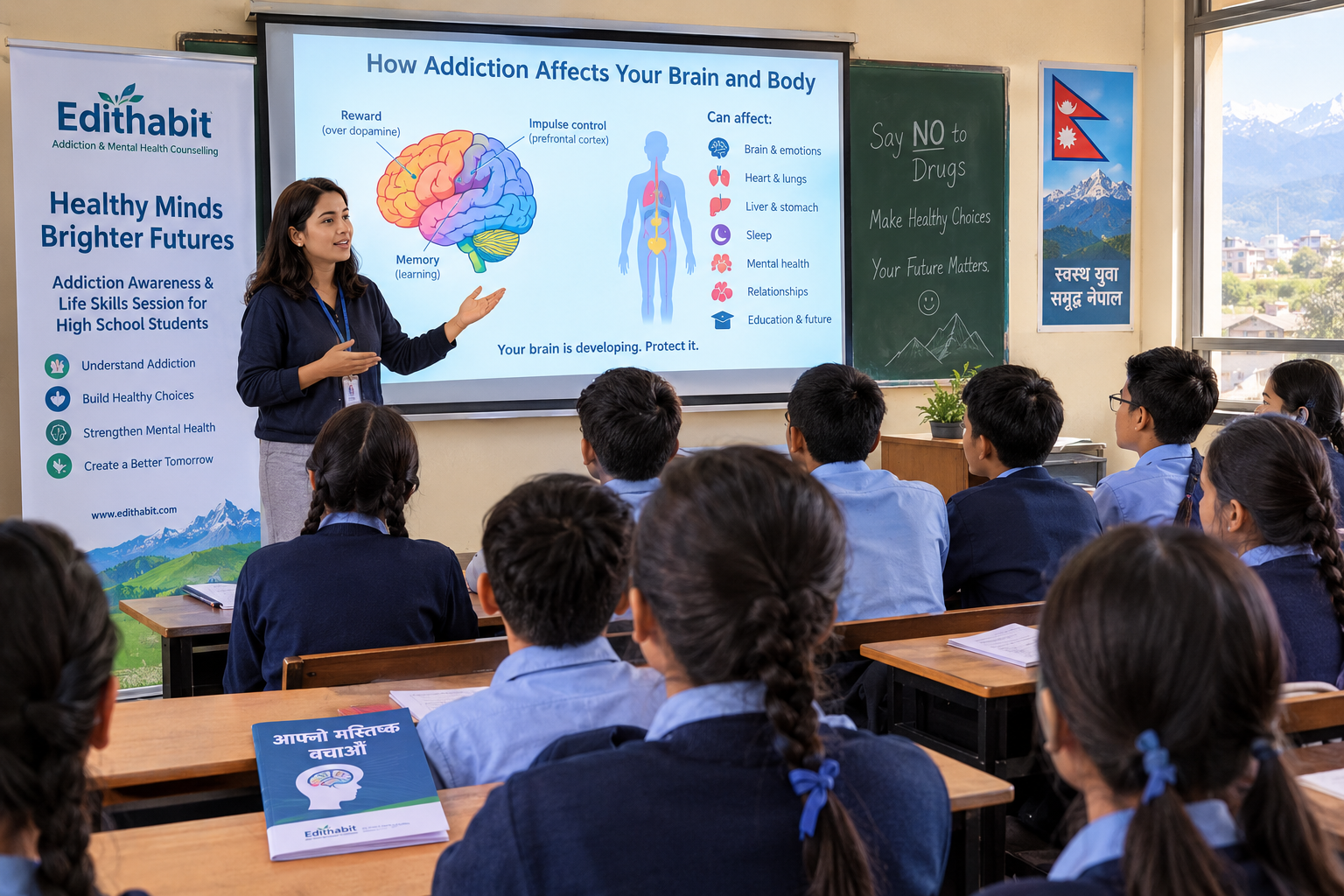
Addiction is more than simply “using drugs” or having a bad habit. It involves changes in brain reward, motivation, learning, memory, impulse control and behaviour. Psychoeducation can help students understand why some substances and behaviours can become difficult to control and why repeated exposure can increase risk.
The adolescent brain is still developing, particularly areas involved in judgment, planning, impulse control and decision-making. At the same time, reward and emotion can strongly influence behaviour. This does not mean adolescents cannot make responsible decisions; rather, it highlights why knowledge, supportive relationships and healthy coping skills are particularly important during this period.
Students should therefore learn a simple message:
“Your brain is developing. Protect it.”
What Should Students Learn?
A comprehensive school-based psychoeducational programme should introduce students to both substance-related and behavioural addictions.
Substance-related addiction
Age-appropriate education can cover:
Alcohol
Tobacco and nicotine
Cigarettes and vaping
Cannabis
Opioids and heroin
Stimulants such as methamphetamine
Cocaine and other stimulants
Sedatives and benzodiazepines
Inhalants
Hallucinogens
Misuse of prescription medicines
Other emerging or synthetic substances
Students should understand that legal does not necessarily mean harmless. Alcohol and tobacco, for example, can cause dependence and serious health consequences.
Behavioural addictions and problematic behaviours
Young people should also understand that addiction-related problems are not limited to chemicals. Education can include gambling disorder and gaming disorder, as well as discussion of problematic patterns involving excessive social-media, internet, smartphone or other highly reinforcing activities.
Importantly, students should learn that not every enjoyable or frequent behaviour is an addiction. Concern arises when a behaviour becomes difficult to control and significantly affects sleep, education, family life, relationships, health or daily responsibilities.
How Addiction Affects the Brain and Body
Psychoeducation should explain the brain in simple, understandable language.
The brain naturally learns from rewards:
Experience → Reward → Learning → Desire to Repeat
Psychoactive substances can strongly interfere with the brain’s reward and motivation systems. Repeated use may contribute to changes in reward processing, craving, learning and self-control.
Students should also understand that addiction can affect much more than the brain. Depending on the substance or behaviour, problems may involve:
Brain → Heart → Lungs → Liver → Sleep → Mental health → Relationships → Education → Family → Future
Understanding these consequences can help young people make informed decisions rather than relying on myths or peer pressure.
Addiction, Stress and Mental Health
Addiction does not develop for only one reason. Risk can be influenced by peer pressure, family conflict, trauma, stress, loneliness, anxiety, depression, poor coping skills, exposure to substance use and social environment.
Students should learn healthy alternatives for managing difficult emotions, including:
Talking with trusted people
Exercise and physical activity
Healthy sleep and routines
Relaxation and breathing techniques
Problem-solving
Hobbies and positive recreation
Emotional regulation
Counselling and professional support
Mental-health education should be integrated into addiction prevention because emotional distress and problematic substance or behavioural use can sometimes occur together.
Peer Pressure and Decision-Making
Knowing that drugs are harmful is not always enough. Students may face situations where friends encourage them to “try it once.”
Therefore, school programmes should include refusal skills, communication, decision-making and role-play.
Students can practise responses such as:
“No, I’m not interested.”
“I don’t want to take that risk.”
“Let’s do something else.”
They should also learn that leaving an unsafe situation and asking for help are signs of strength and responsible decision-making.
Recognizing Early Warning Signs
Students should know how to recognize possible warning signs in themselves or friends, such as:
Sudden academic decline
Major changes in friends or behaviour
Social withdrawal
Secretive behaviour
Sleep or appetite changes
Loss of interest in normal activities
Increasing irritability or mood changes
Loss of control over gaming or other activities
Unexplained financial or family problems
One warning sign does not prove that someone has an addiction. The purpose is to encourage early conversation and appropriate support—not to diagnose or label classmates.
Schools, Parents and Teachers Have a Shared Role
Addiction prevention should involve more than students.
Students need knowledge, life skills and confidence.
Teachers need awareness of warning signs, supportive communication and referral pathways.
Parents need skills for communication, supervision and early intervention.
Schools should provide a confidential pathway connecting students with counsellors, health professionals or appropriate treatment services when necessary.
Most importantly, prevention education should avoid fear, shame and stigma. Students should learn that addiction is a health and behavioural problem that can be prevented, treated and recovered from.
Why Nepal Needs This Now
Nepal needs to strengthen prevention alongside treatment and rehabilitation. Addiction should not be addressed only when a young person has already experienced serious health, educational, family or social consequences.
Regular psychoeducational sessions in high schools can help young people understand:
their developing brain, substances, behavioural addictions, peer pressure, emotional health, healthy coping, early warning signs, decision-making and where to seek help.
The ultimate goal is not simply to tell young people “Don’t use drugs.”
It is to teach them:
Know your brain. Understand addiction. Manage your emotions. Make informed choices. Protect your future.
Organize an Addiction Awareness Session at Your School
If your school, college, youth organization, community group or institution would like to organize an interactive psychoeducational session on substance use, behavioural addictions, adolescent brain development, mental health, peer pressure, prevention and healthy coping, you are welcome to contact us.
Edithabit – Addiction & Mental Health Counselling
Let us work together to provide young people with the knowledge and skills they need to protect their brain, body, mental health and future.
Prevention begins with awareness—and awareness begins before the first use.
Leave a Reply